Industrial Electrical Maintenance Best Practices 2026

Table of Contents
Industrial Electrical Maintenance Checklist: The 2026 Foundation
Daily and Weekly Walkthrough Items
Monthly and Quarterly Deep Checks
NFPA 70B Electrical Maintenance Standards Explained
Predictive vs Preventive Electrical Maintenance: Which Wins in 2026?
Asset Criticality: Prioritizing What Keeps Your Plant Running
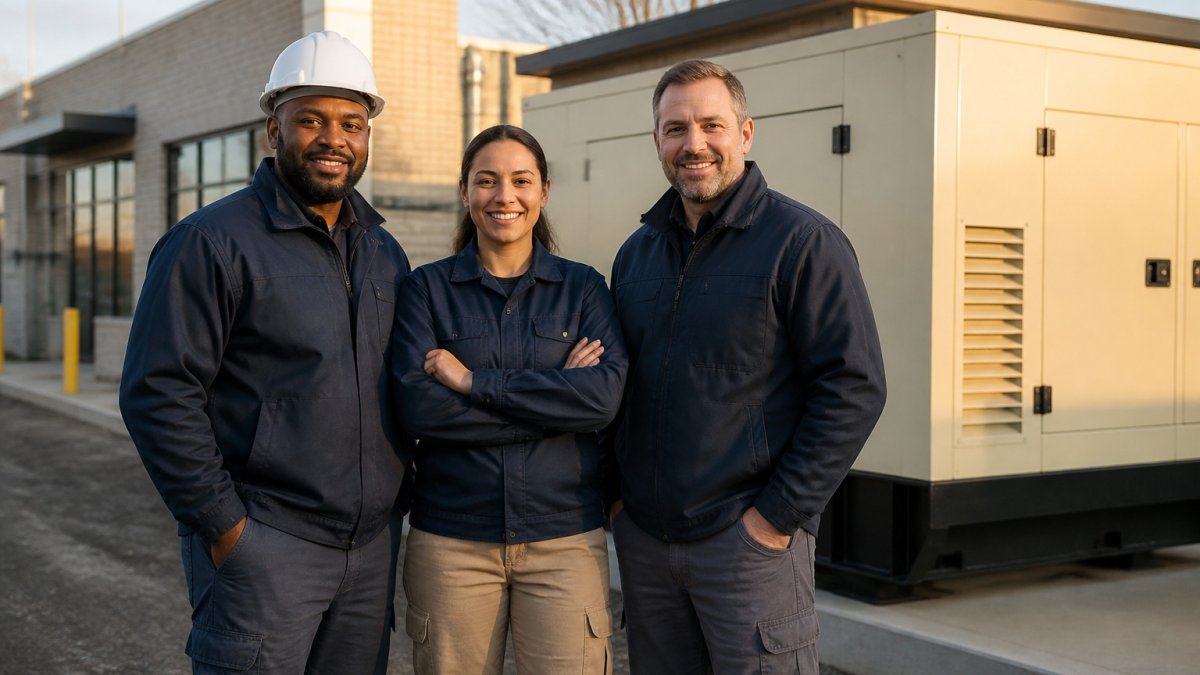
Commercial Generator Maintenance for Small Businesses
Safety, Compliance, and the Digital Shift in Industrial Electrical Maintenance
Predictive Maintenance Integration: The 2026 Differentiator
Cybersecurity for Connected Electrical Assets
Supply Chain Resilience for Spare Parts
Conclusion
Frequently Asked Questions
Last Updated: September 24, 2026
Industrial Electrical Maintenance Checklist: The 2026 Foundation
Industrial electrical maintenance is the practice of inspecting, testing, cleaning, and servicing electrical distribution systems before failures occur, combining scheduled visual inspections, thermal imaging, insulation resistance testing, and documented repairs. This guide from Elecstroman Electric covers the checklists, standards, and digital tools that define industrial electrical maintenance best practices 2026.

Daily and Weekly Walkthrough Items
Daily checks catch cheap problems before they become expensive ones. A walkthrough takes 15-20 minutes per electrical room and requires no test equipment.
Listen for transformer hum changes or breaker chatter
Smell for overheating insulation or ozone near panels
Check indicator lights, alarms, and HMI readouts
Look for water intrusion, dust buildup, or corrosion
Verify enclosure doors and covers are secured
Confirm no unauthorized equipment has been added to circuits
Monthly and Quarterly Deep Checks
Monthly and quarterly work moves from observation to measurement, adding thermal imaging, insulation resistance testing, and torque verification.
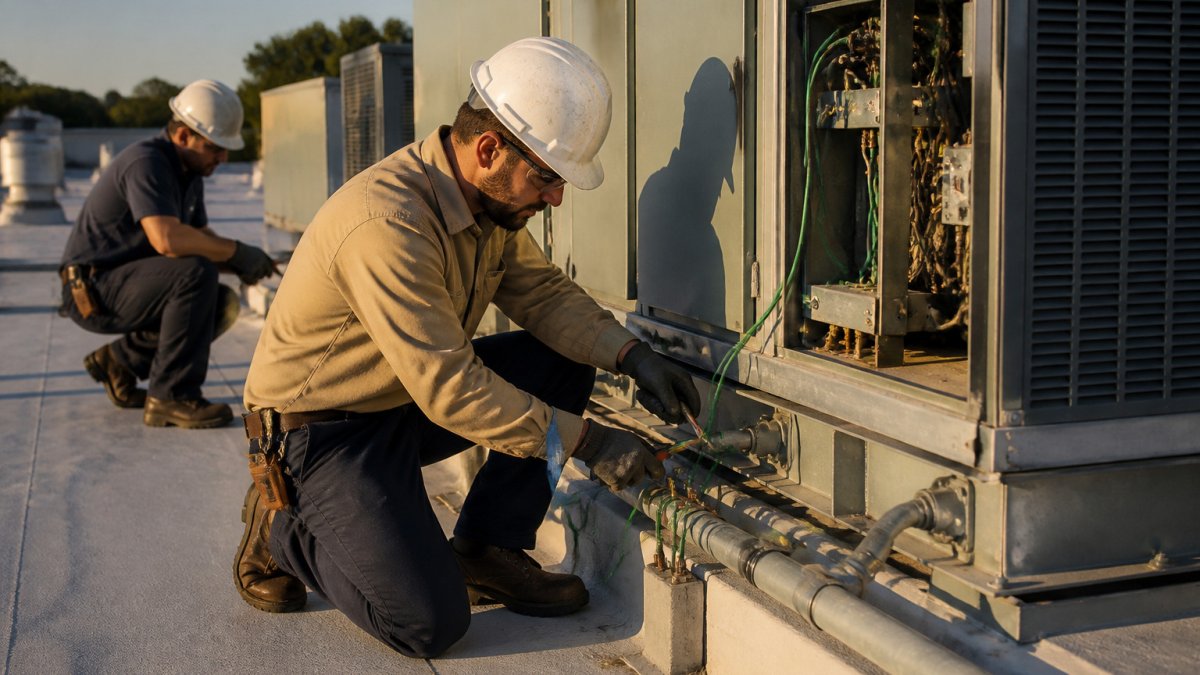
Pro Tip Open-panel infrared scanning requires arc-rated PPE and a documented risk assessment. Closed-panel scanning through IR windows gives you most of the diagnostic value at a fraction of the exposure risk, which is why many facilities standardize on windows for routine surveys.
NFPA 70B Electrical Maintenance Standards Explained
NFPA 70B is the standard for electrical equipment maintenance, and its 2023 revision shifted it from a recommended practice to an enforceable standard. Compliance now carries real weight in audits, insurance reviews, and incident investigations.
Predictive vs Preventive Electrical Maintenance: Which Wins in 2026?
Predictive maintenance wins on critical assets. Preventive maintenance wins everywhere else. That split, not a blanket preference, is the practical answer.
Approach | Trigger | Best For | Main Trade-off |
Preventive | Fixed calendar intervals | Most equipment, compliance baseline | Some unnecessary servicing |
Predictive | Sensor and trend data | Critical, hard-to-replace assets | Hardware and setup cost |
Reactive | Failure occurs | Non-critical, cheap spares | Unplanned downtime risk |
Asset Criticality: Prioritizing What Keeps Your Plant Running
Key Takeaway You cannot afford to maintain everything at the same intensity. Criticality scoring tells you where predictive sensors pay for themselves and where a simple annual inspection is enough.
Revisit the ranking annually and after any major process change. Criticality drifts as production layouts change, and a stale ranking quietly misdirects your budget.
Commercial Generator Maintenance for Small Businesses
Weekly: visual walk-by, check for coolant or oil pooling, enclosure corrosion, rodent intrusion into wiring, and a battery charger that is actually charging. A silently failed charger leaves you with a dead battery on the day you need it.
Monthly: exercise under real load for at least 30 minutes. No-load exercise only proves the engine starts, not that the alternator can carry the building. Transfer load to the generator and back so the automatic transfer switch (ATS) actually cycles.
Quarterly: load bank test at or near nameplate rating, the only way to confirm the generator can carry its rated load without wet-stacking or overheating. Many facilities skip this and discover a derated unit during a real outage.
Annually: oil and filter change, coolant analysis, belt and hose inspection, battery load test, torque check on main lugs, insulation resistance test on alternator windings, and a full ATS sequence test including time-delay and return-to-utility settings.
Watch Out A generator that starts and runs does not mean it will carry the load. The only proof is a load bank test at nameplate rating. Schedule it before storm season, not after the first outage.
Document every exercise and test with runtime hours, load applied, and fault codes. When an outage happens, that log is what your insurer and operations team will ask for first.
Safety, Compliance, and the Digital Shift in Industrial Electrical Maintenance
Safety and documentation have merged into a single discipline. Regulators, insurers, and auditors no longer accept a paper logbook as proof of work, they expect digital records showing what was done, who did it, when, and against which standard. That shift has consolidated the maintenance software market around a handful of platforms, each with a different center of gravity.
Choosing a platform by what it actually does
Mobile work order and PM scheduling tools (MaintainX, Limble, and similar) fit teams under roughly 20 technicians. They excel at getting a work order into a tech's hand, capturing a photo and signature, and closing the loop. Their weakness is analytics: advanced reporting and trend analysis sit behind higher pricing tiers, and they are not designed to ingest high-frequency sensor data.
Enterprise asset management suites (SAP S/4HANA Asset Management, IBM Maximo) integrate maintenance with procurement, finance, and production planning. The trade-off is cost and complexity, a full EAM rollout is a multi-quarter project, not a software download, and it only pays off if you already run the parent ERP.
Condition-monitoring platforms (Tractian, Augury, Fluke Connected Reliability) pair IoT vibration, temperature, and power-quality sensors with anomaly detection. These make predictive maintenance practical by handling the data pipeline most facilities cannot build in-house.
Audit-and-tracking tools (EZOfficeInventory and similar) focus on barcode asset tracking and audit-ready logs. They complement a CMMS, not replace one.
Predictive Maintenance Integration: The 2026 Differentiator
Most industrial electrical maintenance programs in 2026 are still calendar-driven. The facilities pulling ahead layer predictive analytics on top of the preventive baseline, not replacing it.
Continuous thermal monitoring on switchgear and busway joints. Permanent infrared sensors or fixed-path thermal cameras catch loose terminations trending hot weeks before failure. This is the highest-yield predictive application in most plants because loose connections lead electrical fires in industrial distribution equipment.
Vibration and temperature sensors on large motors and generators. Bearing degradation shows in vibration signatures long before a temperature rise or audible change. A sensor on a 500 HP motor costs a fraction of the motor, and replacement lead time is measured in weeks.
Power quality analytics on main feeders. Harmonic distortion, voltage sags, and transients correlate with equipment degradation and process upsets elsewhere in the plant. A monitor on the main service often explains failures no single asset inspection can.
Insulation resistance trending on critical feeders. A single megger reading is a snapshot; a trend line is a diagnosis. Quarterly readings plotted over 24 months reveal a degrading cable or motor winding before it faults.
Cybersecurity for Connected Electrical Assets
Every sensor, gateway, and monitoring platform you add is operational technology (OT) on your plant network and needs the same scrutiny as any networked device. A compromised gateway can feed false data, mask a developing fault, or pivot into the plant control network.
Network segmentation. Maintenance and monitoring traffic belongs on a separate VLAN from corporate IT and the process control network. A flat network means a compromised sensor is a compromised plant.
Credential hygiene. Change default credentials on every gateway, sensor, and platform account at commissioning. Default OT passwords remain one of the most common findings in industrial incident response.
Firmware patch cadence. Define a patch schedule for every connected device and track firmware versions in your asset inventory. Unpatched OT devices are a standing invitation.
Device inventory. You cannot secure what you cannot see. Maintain a current list of every connected electrical asset, its network address, firmware version, and owner.
Vendor access controls. Remote vendor access for diagnostics should be time-bound, logged, and disabled when not in use.
Supply Chain Resilience for Spare Parts
The 2026 reality for industrial electrical maintenance is that lead times on critical components, medium-voltage breakers, large motors, custom switchgear, even some PLC modules, can run into months. A predictive program that identifies a failing asset is only useful if you can replace it.
Key Takeaway The 2026 digital shift is not about buying software. It is about connecting condition data to a maintenance decision, securing the network that carries that data, and making sure the spare part is on the shelf when the data says replace.
Conclusion
The plants that avoid unplanned downtime are not the ones with the longest checklists. They have a documented program, criticality-ranked assets, and records that prove the work happened, what NFPA 70B compliance actually looks like in practice.
Frequently Asked Questions
What are the best practices for industrial electrical maintenance in 2026?
The core practices remain consistent: follow an industrial electrical maintenance checklist, prioritize asset criticality, and comply with NFPA 70B standards. What has changed for 2026 is the integration of predictive maintenance tools, thermal imaging, and digital maintenance logs. Facilities that combine scheduled preventive tasks with condition-based monitoring catch failures earlier and reduce unplanned downtime. Start by auditing your current maintenance plan, then layer in predictive analytics for your most critical equipment.
How does NFPA 70B influence modern electrical maintenance strategies?
NFPA 70B provides the recommended practice for electrical equipment maintenance, covering everything from visual inspections to insulation resistance testing. It shifted from a guide to a standard, meaning compliance requirements now carry more weight during audits and insurance reviews. Modern strategies align maintenance intervals, testing procedures, and documentation with NFPA 70B so facilities can demonstrate due diligence. If your maintenance plan does not reference NFPA 70B, updating it should be a priority for 2026.
What is the role of predictive maintenance in industrial electrical systems?
Predictive maintenance uses sensors, thermal imaging, and power quality analysis to detect early signs of equipment degradation before a failure occurs. Unlike preventive maintenance, which follows a fixed schedule, predictive maintenance triggers action based on actual condition data. This reduces unnecessary maintenance tasks and catches issues that calendar-based schedules miss. For critical assets like switchgear and large motors, combining predictive and preventive approaches delivers the best balance of cost and reliability.
How often should industrial electrical equipment be inspected?
Inspection frequency depends on asset criticality and environmental conditions. NFPA 70B recommends annual inspections for most equipment, but critical assets in harsh environments may need quarterly or monthly checks. Visual inspections can happen weekly as part of routine walkthroughs. Thermal imaging and insulation resistance testing typically follow an annual or semi-annual schedule. Document every inspection in maintenance logs so you can adjust intervals based on actual equipment performance.
What are the core components of a successful electrical preventive maintenance program?
A strong program includes a preventive maintenance checklist, asset criticality assessment, maintenance scheduling, and detailed maintenance logs. It also requires grounding and bonding verification, thermal imaging, and insulation resistance testing. Standard operating procedures keep work consistent across technicians. Regulatory standards like NFPA 70B and OSHA requirements set the minimum bar. The best programs go further by integrating predictive analytics and tracking equipment lifecycle data to plan replacements before failures happen.
What is the 10 rule in maintenance?
The 10 rule in maintenance generally refers to the principle that for every 10 units of reactive repair work, you should aim for a ratio that favors planned maintenance. Some facilities interpret it as spending 10% of replacement cost on preventive maintenance to avoid premature failure. Others use it as a scheduling guideline: ten preventive tasks completed before one emergency call. The exact definition varies, but the underlying principle is the same, planned work costs less than reactive repairs.
What are the four rules of electrical maintenance?
The four rules of electrical maintenance are: inspect regularly, test systematically, document everything, and maintain safety protocols. Regular visual inspections catch obvious issues like loose connections or corrosion. Testing, including insulation resistance and load testing, verifies equipment health. Documentation through maintenance logs creates an audit trail and informs scheduling. Safety protocols, including lockout tagout and arc flash safety, protect technicians. Following these rules reduces unplanned downtime and extends equipment lifecycle.
What are the 7 elements of maintenance?
The seven elements typically include: preventive maintenance, predictive maintenance, corrective maintenance, condition monitoring, asset management, safety compliance, and continuous improvement. Preventive maintenance follows schedules. Predictive maintenance uses data. Corrective maintenance addresses failures. Condition monitoring tracks equipment health in real time. Asset management organizes equipment data. Safety compliance meets regulatory standards. Continuous improvement refines the program over time. Together, these elements form a complete industrial electrical maintenance strategy.
Request a Quote

Comments